

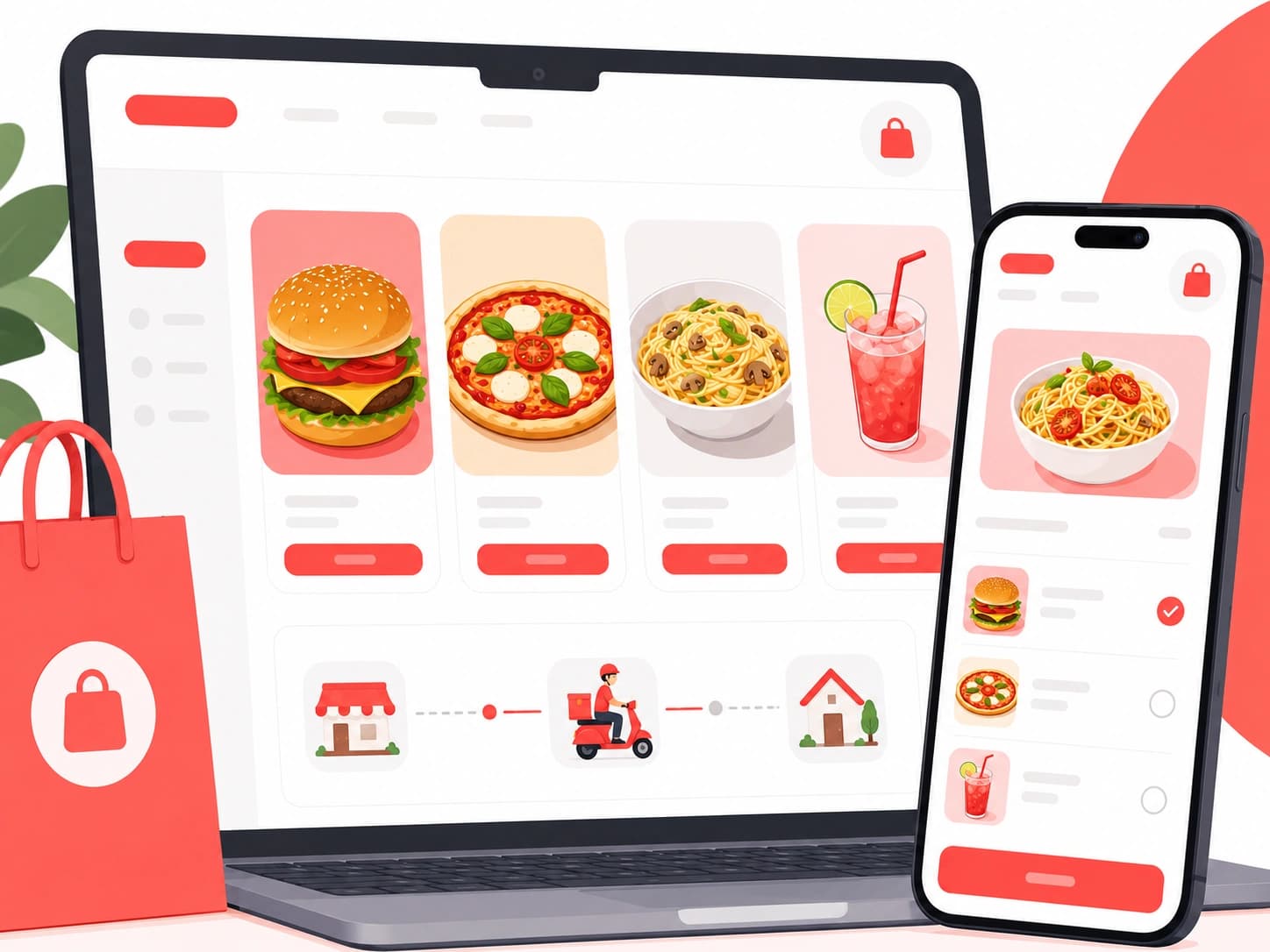
Commission-free restaurant ordering is a direct ordering model where guests order through your restaurant's own website, app, or QR channel instead of a marketplace that takes a percentage from every sale.
For many independent restaurants, this matters because third-party delivery commissions often sit between 15% and 30% per order. In this guide, we will cover what commission-free ordering is, how it compares with marketplaces, and how to move more customers into a direct channel.
What is commission-free online ordering?
Commission-free online ordering is a restaurant ordering setup where the restaurant pays a flat software fee instead of a percentage of each order.
The restaurant controls the menu, checkout, customer record, and follow-up communication. A flat monthly platform fee replaces the variable commission model used by many delivery marketplaces.
The biggest difference is incentive alignment. Your direct system should help customers come back to you, not train them to browse competitors beside your menu.
- Flat subscription instead of order percentage
- Restaurant owns customer data
- Checkout uses the restaurant brand
- Pickup, delivery, and scheduled orders can all run in one flow
Margin math
A $40 order with a 25% marketplace commission can lose $10 before food cost, labor, packaging, and delivery operations are counted.
How much do delivery apps charge restaurants per order?
Many delivery apps charge restaurants around 15% to 30% per order, depending on placement, delivery handling, and promotional agreements.
The exact number varies by contract and market, but the restaurant should model the real net revenue after commission, processing, discounts, refunds, and packaging.
A direct ordering system does not remove every operational cost. It removes the percentage toll that scales up every time your own customers order from you.
| Channel | Typical cost model | Customer data |
|---|---|---|
| Marketplace app | Percentage commission per order | Limited |
| Direct ordering | Flat software fee plus payment processing | Owned by restaurant |
| Phone orders | Staff time and manual errors | Often incomplete |
How can restaurants get customers to order direct?
Restaurants get more direct orders by making the direct channel easier to find, easier to use, and more rewarding than marketplace ordering.
The direct channel should be visible on Google Business Profile, your website, social bios, receipts, table tents, packaging inserts, and QR codes.
Use loyalty points, direct-only bundles, and reorder reminders to make the direct path feel useful rather than like a favor you are asking from guests.
- Put direct ordering above marketplace links on your website
- Add QR codes to bags, tables, counters, and receipts
- Offer loyalty credit only on direct orders
- Send re-order campaigns to past direct customers
What features matter in a direct ordering system?
The most important features are menu control, fast checkout, scheduled pickup, delivery zones, payments, kitchen notifications, and customer follow-up.
A direct ordering platform should feel operationally reliable, not just visually polished. Staff need accurate tickets, clear pickup times, modifier handling, and sold-out controls.
Customers need fast mobile checkout, Apple Pay or card options where available, and confidence that their order reached the restaurant.
Start with one journey
Launch pickup first if delivery operations are not ready. A focused launch is easier for staff and customers to trust.
When does Loglime make sense for a restaurant?
Loglime makes sense when a restaurant wants a branded app, direct ordering, digital menu, loyalty, and admin panel without paying order commissions.
The current promotional package is built around an Ordering App plus Admin Panel at $149, so restaurants can start with a direct revenue channel before layering in advanced modules.
It is especially useful for cafes, bakeries, quick-service restaurants, cloud kitchens, and multi-location brands that want customer retention under their own name.
Frequently asked questions
Conclusion
Direct ordering is not only a checkout feature. It is a margin and customer ownership strategy. If your restaurant already has repeat customers, moving even a portion of them direct can change the economics quickly.
Discussion
Comments
No comments yet.
Ask a question or add what worked in your restaurant.